Fun & Hobbies
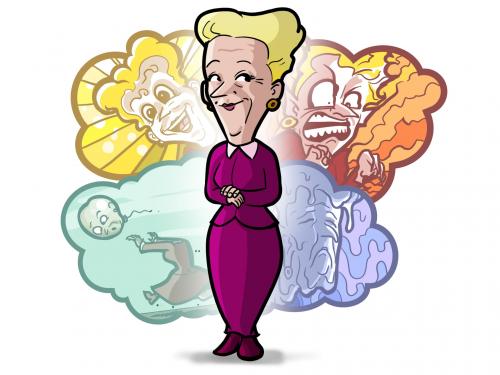
‘Fun’ is not a word that is usually associated with mental illness!
And yet I have always argued that keeping a solid sense of humour is crucial when living as a Bi-Polar Lander.
I do not suggest that we encourage anybody to laugh AT mental illness because this is cruel and idiotic, but I do encourage us all to learn to laugh WITH our illness.
Once again I do not expect anyone going through the throws of a deep depressive episode to be having much fun. A manic episode can lead to laughter but in this case it is ‘maniacal laughter’ which is symptomatic rather than coming from a good healthy sense of humour. It is between our episodes that we have the opportunity to look at our situation with a wry smile.
A few years ago I had a friend who was also a neighbour and we both suffered from bouts of depression so we used to spend time together to keep each other company. After a while we started referring to ourselves as The Desperation Sisters and this made us laugh, which in turn made our depression easier to bear. Depression and mania in and of themselves are not funny but the behaviour they ‘force’ us to adopt can be amusing. For example:
- Staying in our pyjamas without a shower for days on end and yet putting some make-up on!
- Eating breakfast in the middle of the afternoon and eating dinner immediately afterwards, and then eating breakfast again in the evening!
- Painting every piece of furniture in the house in the middle of the night and in the middle of winter while keeping all windows open and the house freezing so that we have to watch TV in our hats and coats!
- Developing some nonsensical phobia about the landline telephone so that even its ringing sends us running into the next room!
- Our taste buds being affected by our medication so that we can only eat bananas when they are green!
I am sure you could think of plenty more out of your own experience but you must admit that the idea of a smelly-made-up-evening porridge-consuming-freezing TV-watching-phone-phobic- green-banana-eating enthusiast is amusing!!
Laughter is free medicine and it is catching so it is easy to spread joy, if only just for a few moments. Finding our way back to laughter is also a very effective way to keep us from feeling constantly sorry for ourselves, which is an easy trap to fall into when living in Bi-Polar Land. Self-compassion is vital and healing BUT Self-Pity only makes things worse.
Having some fun takes us away from the inner landscape of our BPD to the area of our external activities. In this area hobbies play a very important part.
Any hobbies are important but it is a good idea to start with hobbies that use our BODY because these give our brain a rest from dealing with what is a complex illness. These hobbies also encourage our coordination and they give us a sense of achievement which is so welcome when living with a chronic illness that, by its very nature, goes around in circles (episodes) and leads us nowhere. Essentially there are two kinds of physical hobbies:
- Those that use our hands
- Those that use our feet
I shan’t list them all but I am sure you can think of a list yourself. Here are just a few examples:
- ‘Hand Hobbies’: knitting, crochet, embroidery, sewing, basket weaving, wood wok, clay sculpture, cooking, etc
- ‘Feet Hobbies’: walking, power walking, exercise routine, dancing, step, yoga, etc
Intellectual hobbies that use our BRAIN are also useful because they take our mental energy away from the confines of our self-awareness and they encourage learning which stretches the limits imposed upon us by our mental illness.
Once again I shan’t list them all but here are a few examples:
- Reading
- Research & analysis of online information
- Games such as Chess or Sudoku
- Writing for ourselves or for others
- Teaching - online or face-to-face
Having a hobby can be enormous fun and can give us a welcome break from the day-to-day dreariness of living in Bi-Polar Land. It is also something we can share with others, family and friends, online or in person which fights isolation.
Finally a hobby can provide us with little projects that can fill the gap left by no longer being able to work, and this is hugely valuable.
I encourage all Bi-Polar Landers to have a hobby they enjoy.